




THE ROLE OF COORDINATION
SEQUENCING OF TRADES
READ OUR SERVICE FAQs

Construction Site Coordination for Framing Projects in Ontario
Construction site coordination ensures that framing work is completed in the correct sequence, aligned with project timelines and overall construction requirements.
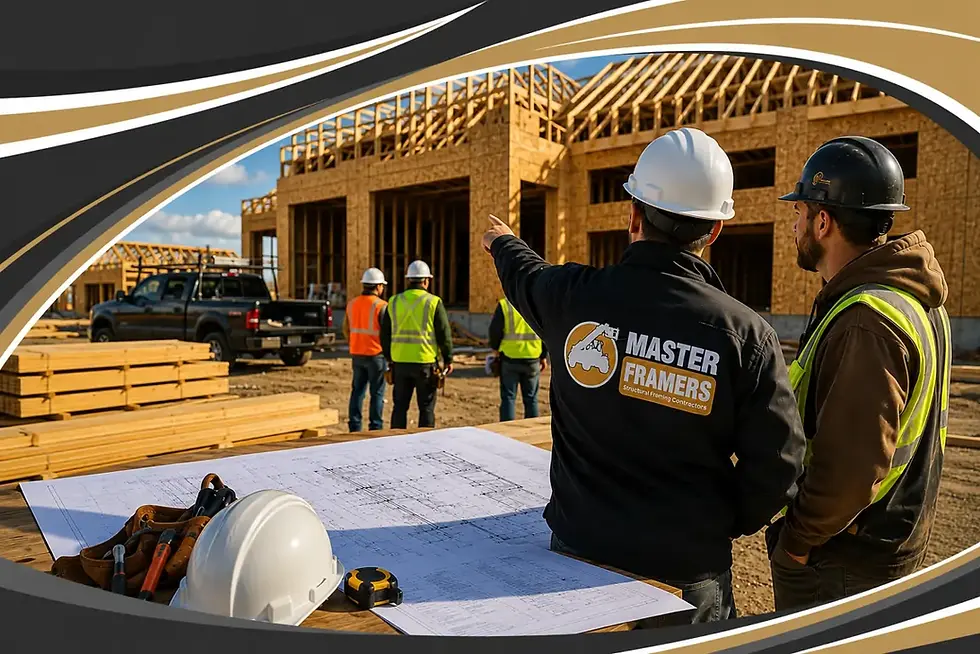
As an Ontario framing contractor, Master Framers applies structured coordination methods to manage framing execution across residential, commercial, and multi-unit construction projects.
Framing project coordination involves planning, scheduling, and aligning on-site activities so that each stage of construction progresses efficiently.
Effective coordination reduces delays, maintains workflow continuity, and ensures that structural framing integrates properly with all phases of the build.
Ontario Construction Coordination


What Construction Site Coordination Involves
Construction site coordination includes organizing tasks, scheduling work, and managing communication between different stages of a project.
In framing, this means ensuring that structural systems are installed in alignment with project sequencing and construction timelines.
Project Sequencing and Scheduling
Framing work must follow a defined sequence to maintain efficiency and structural accuracy. Build sequencing coordination ensures that each phase is completed in the correct order, allowing construction to progress without interruption.
On-Site Coordination Between Trades
Framing is closely connected to other construction stages, including mechanical, electrical, and finishing work. On-site coordination ensures that all trades operate within a structured workflow, reducing conflicts and delays.
Workflow Management and Execution
Effective coordination allows framing work to proceed smoothly by aligning labor, materials, and scheduling. Managing workflow ensures that construction progresses efficiently while maintaining structural consistency.
How Coordination Supports Framing Efficiency
Construction coordination improves efficiency by ensuring that framing work is completed according to plan and within the required timeline. When coordination is properly managed, projects move forward without unnecessary delays or disruptions.
These coordination methods are applied across projects in areas such as framing contractor Richmond Hill and framing contractor Markham, where structured workflow management is essential for both residential and multi-unit construction.
Reducing Delays and Disruptions
Proper construction coordination minimizes delays by ensuring that each stage of the project is prepared before work begins. This allows framing work to proceed without interruptions.
Maintaining Structural Consistency
Coordinated execution ensures that framing work remains consistent with construction drawings and project requirements. This helps maintain accuracy throughout the build.
Integration with Construction Drawings
Construction site coordination works alongside planning and layout processes to ensure that framing work is executed correctly. Coordination aligns scheduling and sequencing with the structural layout defined in construction drawings.
This connection is supported through detailed planning methods outlined in our framing construction drawings process, ensuring that execution remains aligned with project specifications.
Framing Services Supported by Coordination
Framing services include residential framing, structural framing, and multi-unit construction, all supported by effective construction coordination and project sequencing. Each project requires structured planning to ensure that framing systems are installed accurately and on schedule.
From custom homes to large-scale developments, construction coordination ensures that framing work progresses efficiently across Ontario.
Coordination and Construction Workflow Alignment
Coordinating framing work with the overall construction workflow ensures that each phase of the build integrates properly. This includes aligning framing installation with inspections, material delivery, and other construction activities.
Effective workflow coordination allows projects to move forward without delays while maintaining structural accuracy and overall project consistency.
Working with a Framing Contractor in Ontario
Working with a framing contractor who understands construction site coordination is essential for maintaining timelines and structural alignment. Master Framers applies coordination processes across all projects, ensuring that framing work follows construction sequencing and project requirements.
Whether the project involves residential construction, multi-unit developments, or commercial builds, construction coordination plays a central role in successful framing execution.
Construction site coordination in framing projects is often described as project sequencing, build coordination, or construction workflow management.
Frequently Asked Questions
Q: What is construction site coordination in framing?
A: Construction site coordination involves organizing and scheduling framing work to ensure it aligns with project timelines and other construction phases.
Q: Why is coordination important in framing projects?
A: It helps prevent delays, ensures proper sequencing, and maintains consistency between different stages of construction.
Q: How does coordination affect construction timelines?
A: Proper coordination keeps projects on schedule by ensuring that each phase is ready before work begins.
Q: Who manages construction coordination on a project?
A: Framing contractors and project managers work together to coordinate scheduling, sequencing, and on-site execution.
Construction site coordination ensures that framing work is completed efficiently and in alignment with project timelines.
By managing sequencing, workflow, and execution, framing projects can progress smoothly while maintaining structural accuracy and consistency across all stages of construction.